


In our earlier post, we introduced the TIF Flywheel as a way to think about digital growth as a connected system, not a series of one-off fixes.
But frameworks only matter if they hold up in real situations.
Below is a simplified example of how the Flywheel works in practice, using a common scenario we see with B2B manufacturing companies. The specifics will vary, but the pattern is familiar.
The Scenario
Let’s say you’re a B2B manufacturing company facing three common challenges:
- Low lead generation — the website isn’t capturing enough qualified leads.
- Poor user experience — navigation is confusing, pages load slowly, information is hard to find.
- Sales flow mismatch — the website does not reflect how your sales process actually works.
Here’s how we would apply the TIF Flywheel to diagnose the issues and determine what to address first.
Strategy
We always start with strategy.
That begins with a Digital Roadmap session, where we work with your team to identify the biggest obstacles, decide which deserve attention first, and create a structured action plan to achieve your goals.
This often includes:
- Establishing baseline metrics through a quarterly website business review.
- Setting up heatmaps and session replay tools to understand where users are struggling.
- Creating a quarterly A/B testing program to systematically improve performance.
The goal is clarity. Before anything is built or changed, everyone understands what success looks like and how progress will be measured.
When the Strategy pillar is strong:
- Everyone understands the North Star, priorities, and tradeoffs.
- Roadmaps guide execution, so we are not chasing shiny objects.
- Data from experiments and analytics informs what we do next.
- Teams can see clear connections between investments, activity, and outcomes.
Authority
Next, we focus on authority. This is about positioning you as a credible leader in your space.
That might include the following:
- Launch a thought-leadership content program with industry editorials that showcase your expertise.
- Design and produce high‑value lead magnets and premium resources with a clear distribution plan.
- Create a blog and content calendar to ensure consistent publishing.
- Start a guest posting and link outreach program to connect you with influencers and media outlets in your industry.
- Build a trust asset cycle by prominently featuring testimonials and case studies throughout the site to reinforce trust as people move through it.
When someone lands on a site, they should quickly understand why a company is credible and why their perspective matters.
When the Authority pillar is strong:
- Prospects clearly understand what you are known for and why they can be trusted.
- The website and content library feel deep, current, and useful.
- Case studies and testimonials actively support sales conversations.
- Lead magnets and premium content generate warm, educated leads.
Traffic
Once authority is established, we address visibility to attract the right visitors to the right pages at the right time.
That often includes:
- A schema lift to improve the behind-the-scenes structure that helps search engines correctly understand your content.
- Expanding location or service pages to capture searches across all your offerings.
- Creating campaign-ready landing pages optimized for paid ads.
- Using content atomization to break long-form content into smaller, more targeted pieces that can rank for specific keywords or be used on other channels.
- Building segmented experiences or pages tailored to your different customer groups.
The goal is to attract the right traffic in a way that aligns with your business priorities.
When the Traffic pillar is strong:
- More of the right people are finding you across channels.
- Organic and paid efforts are coordinated, not competing.
- New services, locations, and campaigns have a clear path to visibility.
- Search presence grows in both rankings and SERP footprint.
Conversions
Conversions are where interest turns into action.
This work typically includes:
- Improving website navigation and page clarity so users can quickly find what they need, adding clear descriptions, and making it easier for users land where you want them.
- Creating gated assets or content hub landing pages (like downloadable guides or product spec sheets) to capture email addresses and keep in touch with customers who have “raised their hands”.
- Testing offers and value propositions to see what resonates most.
- Developing bottom-of-funnel content like product comparisons and use cases that speak directly to decision-makers.
- Optimizing form flows to reduce friction and encourage follow-through.
- Setting up email nurturing campaigns to keep leads engaged after they convert.
This is where traffic and authority translate into leads.
When the Conversion pillar is strong:
- More existing traffic turns into leads, demos, or sales.
- Critical pages and funnels are backed by test results, not guesses.
- Users find it easier and more obvious to take the next step.
- Nurturing continues after the first conversion, not just at the top of the funnel.
Infrastructure
Infrastructure supports everything else.
This layer often involves:
- Running an accessibility sweep to make sure the site works for everyone and there are no compliance issues.
- Fixing performance bottlenecks and site speed by improving Core Web Vitals.
- Upgrading GA4/GTM setup to track custom events that matter to your business.
- Integrating CRM systems so form submissions flow directly into your system.
- Implementing advanced on-site search functionality to help users find products or information when they struggle.
Strong infrastructure ensures improvements continue to work as traffic, leads, and usage increase.
When the Infrastructure pillar is strong:
- The website is fast, stable, and accessible to all users.
- Leadership can trust the data in their dashboards and reports.
- Compliance and security risks are reduced and proactively managed.
- Future enhancements become easier and less risky to ship.
How It All Connects
Each pillar builds on the others. Better infrastructure means your site can handle increased traffic. More traffic means more data to optimize conversions. Better conversions validate your authority-building efforts. And strategy ties it all together, ensuring every initiative is aligned with business goals. This is how progress compounds.
What is the TIF Growth Flywheel™?
It’s a system that guides you with confidence by leveraging your digital assets to support your business goals.
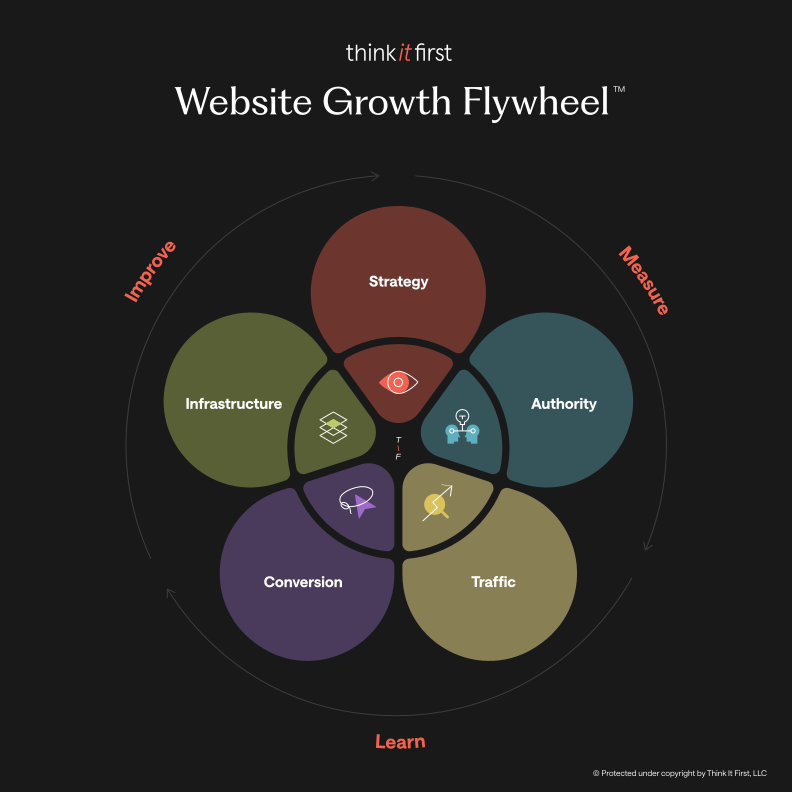
The TIF Flywheel is built on more than 15 years of learning what actually drives sustainable digital growth for companies today. It replaces random tactics with a digital growth framework that helps teams prioritize, sequence work, and make calculated steps in the right direction.
Instead of reacting to individual problems like low traffic or weak conversions, the Flywheel helps teams see how strategy, authority, traffic, conversions, and infrastructure connect and build on one another.
Most companies approach digital reactively, fixing issues as they surface or rebuilding their site every few years.
The Flywheel supports proactive growth through small, consistent improvements across all five pillars that compound over time.
Try It For Yourself
Ready to implement the TIF Flywheel? Book a strategy intro call and we’ll identify where focused improvements could have the biggest impact on your growth. You can also download our free Website Checklist below to start identifying your website’s pain points.
Start with a smarter first step.
Book a Strategy Intro Call.
Also read
The TIF Flywheel™: Our Approach to Digital Growth
Discover our proven 5-pillar approach to digital growth. From strategy to conversions, learn how our Growth Plans drive measurable results for businesses.
7 Website Red Flags That Are Killing Your Leads (And What to Do About It)
If your site isn’t converting the way it should, you may already be unfortunately familiar with one —or more— of these critical red flags. Let’s take a look at the 7 biggest website issues identified in Think It First’s free B2B Marketing Website Checklist — and tell you how to fix them.
The Hidden ROI of a Website Growth Plan
Done right, a website growth retainer offers strategic improvements with measurable outcomes. Explore the hidden ROI of an iterative approach to upgrades.
Beyond the Builder: Why a Custom WordPress Theme is Your Site’s Secret Weapon
Drag-and-drop builders like Elementor and Divi slow your site down. A custom WordPress theme makes you a marketing machine. Here’s why.
Five Steps to a Winning Website Project
Successful website projects are a collaboration between you (the client) and the website design agency that you’re working with. In this guide, we’ve put together 5 important steps that are crucial for a winning website project. If your digital agency works in tandem with you to deliver each of these 5 important steps, you’re going to end up with a result that you can both be proud of. More importantly, it will be something that your customers will love.