


Two key deliverables are introduced at the start of a Think It First website redesign: the sitemap and the content outline. Because both relate to page planning, they are often confused with one another.
They are not the same, but they do work together.
A sitemap and a content outline serve different purposes at different moments in the redesign process. Sometimes clients bring copy ideas to a site mapping exercise and site architecture changes to a content outline — the exact reverse of what’s being decided. It’s a real source of misalignment that often tightens deadlines and leads to costly rewrites.
If you’re kicking off a new website redesign with TIF soon (or just curious about how we strategize things), this article dives into both and precisely how they fit together.
At a high level, the sitemap defines the site’s structure, and the content outline defines how each page is used.
Think of it this way: if your website is a house, a sitemap is the layout while a content outline is the interior design plan. One defines the rooms, and the other defines what goes inside them.
The Sitemap: The Architectural Framework
Site structure planning begins with a sitemap that establishes the structural framework of your website. It defines the site’s information architecture: what pages exist, how they relate to one another, and how teams can align on scope before content or design work begins.
“The sitemap is just the page titles — that throws a lot of clients off. They’ll see a sitemap and be like, what’s this? Sitemaps contain all of the architecture of your site: the foundation of your house, the studs. The list drives everything.”
— Jen Merritt, TIF Strategy Lead
Purpose: To define what pages exist on your site and how they connect to one another.
When It Happens: Early in the strategy or discovery phase, after your brand, audience, and SEO goals have been defined.
What It Includes:
- A hierarchical list or visual map of every page on the site.
- The top-level navigation and all supporting subpages.
- Core page types, such as Home, About, Services, Industries, and Contact.
- Notes on page relationships (e.g., “Industries” pages will link to individual industry subpages).
What It Does Not Include:
- Written copy, headers, or calls-to-action.
- Page structure or content modules.
- Design notes or visual elements.
At this stage, the sitemap is about alignment, not messaging. It ensures everyone agrees on what is being built before decisions are made about how each page communicates. The approved sitemap can also serve as the foundation for a content migration checklist by showing which existing pages will be retained, revised, consolidated, or removed.
The Content Outline: The Storytelling Blueprint
In a business website design project, the content outline translates the site structure into page level intent. It defines what each page needs to communicate, section by section, so messaging, design, and development can move forward with clarity.
Purpose: To define what content lives on each page, section by section, and how it will communicate your value to your users.
When it Happens: After the sitemap has been approved, during the content planning phase (before design begins).
What It Includes:
- A detailed, page-by-page outline of all content sections or modules.
- For each module, the section heading, content goals, draft copy, and calls-to-action.
- Notes for the design and development teams, such as “split image layout,” “accordion FAQ,” or “form embed.”
- SEO keywords, page titles, meta descriptions, and tone-of-voice considerations.
What It Does Not Include:
- Final visuals or UI design. That comes after the content outline has been approved.
- Polished production copy or finished imagery.
The sitemap defines the pages you will build. The content outline defines what each page needs to say, do, and support.
“Content outlines are where the work gets real — and a little overwhelming. One client’s site was so big we ran out of page tabs in Google Docs; had to create multiple files. The jump from ‘list’ to ‘every word on the site’ is huge. But it’s possible because we’re so informed about direction from the start.”
— Jen Merritt, TIF Strategy Lead
Why Both Are Necessary
The sitemap and the content outline work together, but they solve different problems. The sitemap is owned by strategy and UX, and focuses on structure. It defines the full set of pages, their hierarchy, and how users move between them. The content outline is owned by strategy and copy, and focuses on substance. It defines what each page needs to communicate, section by section, to support your goals.
When both documents are created and approved before design and development begin, teams share a clear understanding of scope, priorities, and intent. That alignment helps prevent common issues that slow projects down, such as unexpected new pages appearing midstream, assumptions about where content should live, or last minute content gaps that delay launch. Together these documents also provide a clear foundation for the broader digital strategy roadmap guiding design, development, and future optimization.
Put simply, you cannot design what you have not outlined, and you cannot outline what you have not structured.
“In combination, a thoughtful sitemap and a thorough content outline create a website backed by SEO, aligned with dev decisions, and designed to delight. If your website is a house, we create the conditions for users to come over and party.”
— Jen Merritt, TIF Strategy Lead
The Workflow: How It Fits Into a Redesign Timeline
The order of these steps is intentional. A strong website redesign checklist follows this sequence because each phase builds on the decisions made in the one before it.
- Discovery and Strategy: The process starts with research and alignment. A content audit, SEO analysis, stakeholder input, and business goals inform the sitemap so the team can agree on scope and structure early.
- Content Planning: Once the sitemap is approved, the focus shifts to content outlines. Each page is planned section by section to clarify messaging, hierarchy, and intent before any design decisions are made.
- Design: With content outlines in place, designers can focus on layout, visuals, and interaction patterns that support the content, rather than guessing what needs to fit where.
- Development: Finally, approved content modules are mapped to CMS components. This ensures the site is built in a structured, reusable way that supports future updates.
This sequence helps reduce rework, protect timelines, and ensure every phase of the project has the clarity it needs to move forward efficiently.
After launch, ongoing optimization becomes the next priority. Many organizations move into structured improvement cycles through a website growth plan, where real performance data guides what gets refined, expanded, or tested next.
Example: Breakdown
To make the difference between a sitemap and a content outline more concrete, it helps to look at how they appear.
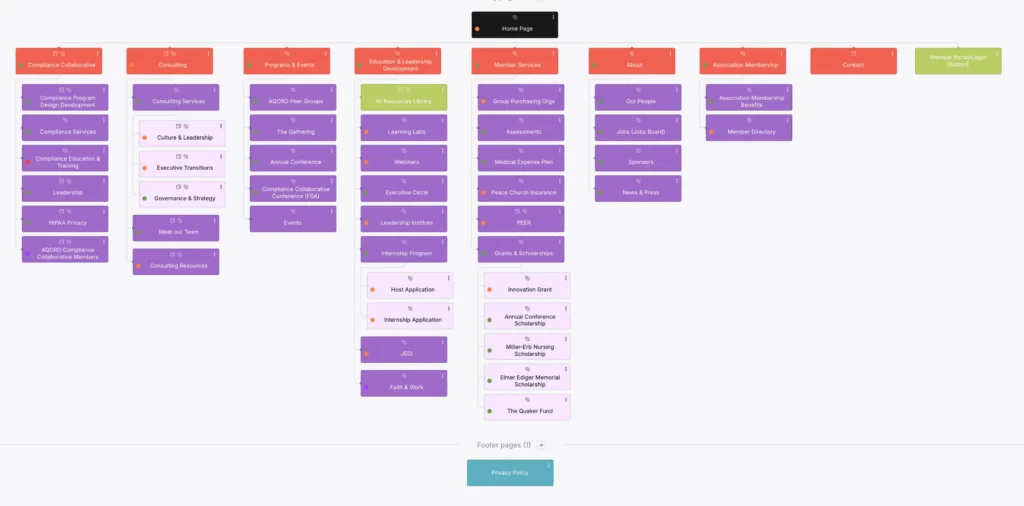
Sitemap View of a Home Page
In a sitemap, the homepage is represented as a single node. It appears at the top of the hierarchy and connects to the primary navigation items, such as About, Services, Industries, and Contact.
At this stage, the sitemap confirms the homepage’s role in the overall structure. It shows how users can move from the homepage to other key sections of the site, but it does not describe what content lives on the page itself or how it is organized.
Content Outline View of a Home Page
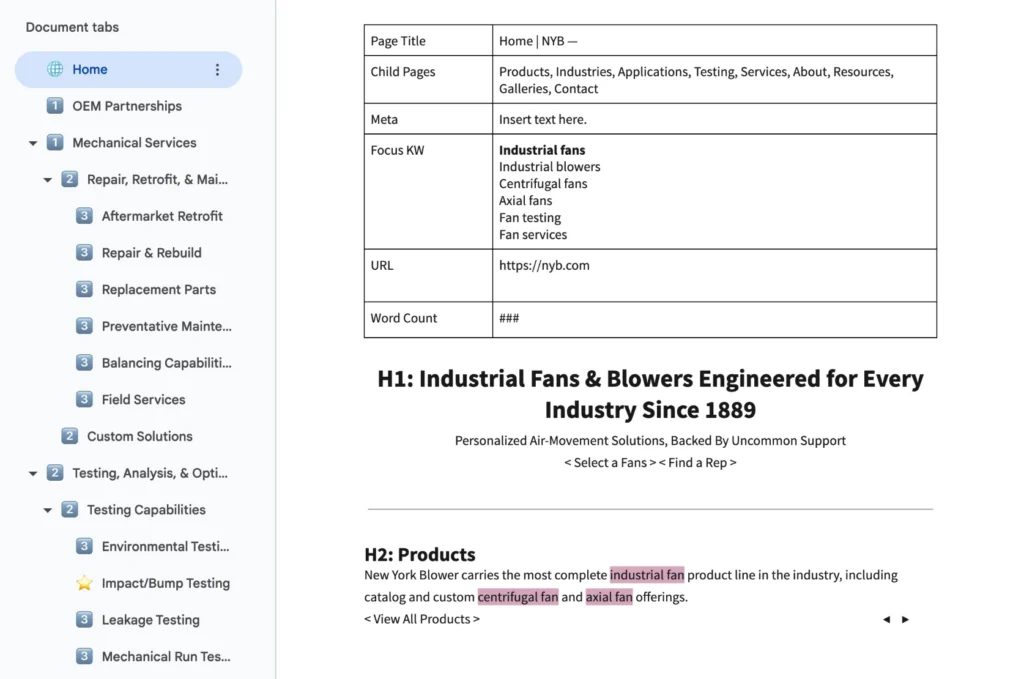
In a content outline, the homepage is broken down section by section. Each module is planned with a clear purpose, such as introducing the value proposition, highlighting key services, establishing credibility, or driving a primary call to action.
The outline defines the order of these sections, the messaging goals for each, and how they support user needs and business priorities. This level of detail gives design and development teams clear direction before visual layouts or templates are created.
The Strategic Value of Sequential Planning
The sequential nature of sitemap-then-content-outline is deliberate. It reflects the natural progression from strategic thinking to tactical execution.
The sitemap forces conversations about business priorities, user journeys, and competitive positioning. Only after these foundational decisions are made can teams effectively plan the specific content that will bring those strategies to life.
This approach also creates natural checkpoints for stakeholder alignment. Approving the sitemap ensures everyone agrees on the scope and structure. Approving the content outline ensures everyone agrees on the messaging and user experience.
TIF’s POV: Strategy-Driven Collaboration
As part of our content strategy consulting, the sitemap and content outline are not treated as isolated deliverables. They are sequenced, collaborative working sessions that align strategy, copy, design, and development early in the process.
The sitemap ensures the team is aligned on the project’s goals and scope, and the content outline ensures that every page and section has a clear purpose before design and development resources are applied.
The result is a website redesign process that moves faster, with fewer surprises, less rework, and clearer decision-making at every stage. It is how we ensure that every page is intentional and every investment supports measurable outcomes.
A successful website is not defined by how it looks at launch, but by how strategically it was planned. If you’re ready to start your next website redesign project on the right foot, schedule a strategy call with the Think It First team.
Redesign the Right Way.
Book a Strategy Intro Call.
More Thinking
The Harsh Truth About CRO: More Traffic ≠ More Revenue
B2B leaders: stop chasing clicks. Discover how optimizing website conversion paths, lead nurturing, and the marketing funnel drives real revenue.
7 Website Red Flags That Are Killing Your Leads (And What to Do About It)
If your site isn’t converting the way it should, you may already be unfortunately familiar with one —or more— of these critical red flags. Let’s take a look at the 7 biggest website issues identified in Think It First’s free B2B Marketing Website Checklist — and tell you how to fix them.
How to Use a Website Checklist to Optimize Your Digital Strategy
A well-structured website is the key to an optimized digital strategy. It’s a powerful tool for lead generation, brand authority, and sales growth. Yet, many B2B marketers struggle to manage their website effectively while juggling other responsibilities. From optimizing for SEO to ensuring your UX creates a seamless user journey, maintaining a high-performance site is no small feat.
Local Service Ads: What They Are, How They Work, and Whether They’re Right for Your Business
Learn what Local Service Ads are, how they work, and whether they make sense for your business. A practical guide to Google’s pay-per-lead ad format.
You Need to Tell Your Marketing Department Everything; Here’s Why
Siloed marketing teams underperform. Share sales, ops & customer intel so your marketing department can align campaigns to real business goals.